|
|
||||||||||||||||
|
||||||||||||||||
|
||||||
|
|
|
|
Cobaltite
|
|
| | |
| Discovered in 1832; IMA status: Valid (pre-IMA; Grandfathered) | ||
|
| ||
|
Chemistry |
|
|
| |
|
CoAsS | |
|
|
Cobalt Arsenic Sulfide |
|
Molecular Weight: |
165.92 gm |
|
Composition: |
Cobalt |
35.52 % |
Co |
|
|
|
|
Arsenic |
45.16 % |
As |
|
|
|
|
Sulfur |
19.33 % |
S |
|
|
|
|
|
100.00 % |
|
|
|
|
|
|
||||
|
Classification |
|
|
| |
|
Sulfides | |
|
2/D.18-10 | |
|
|
2 : SULFIDES and SULFOSALTS (sulfides, selenides, tellurides;
arsenides, antimonides, bismuthides; sulfarsenites, sulfantimonites,
sulfbismuthites, etc.) |
|
Related to: |
Cobaltite Group. Cobaltite - Ullmannite - Tolovkite Series. Chemically very similar to Glaucodot and Alloclasite. |
|
Members of Group: |
Cobaltite Group: |
|
Varieties: |
None |
|
Synonyms: |
None |
|
|
|
|
Crystal Data |
|
|
|
|
|
Commonly as pseudocubic or pseudopyritohedral crystals, or combinations having striated faces as with pyrite, to as large as 8 cm, also as pseudo-octahedra; granular massive. |
|
|
About {111} as a pseudocubic three-fold axis, with {011} and {111} of the pseudocubic habit as twin planes, rare. Twin lamellae are commonly observed in polished section, which may exhibit a flamelike texture. |
|
|
|
|
|
Physical Properties |
|
|
|
|
|
Perfect on {001} |
|
|
Irregular/Uneven |
|
|
Brittle |
|
|
5.5 |
|
|
6.33 (g/cm3) |
|
|
None |
|
|
Not Radioactive |
|
|
Health Warning: |
CAUTION: Contains Arsenic, a poisonous element - always wash hands after handling. Avoid inhaling dust when handling or breaking. Never lick or ingest. |
|
|
|
|
Optical Properties |
|
|
|
|
|
Silvery White to Reddish Silvery White, Violet Steel Gray, or Black |
|
|
Opaque |
|
|
Metallic |
|
|
R: (400) 48.2, (420) 48.0, (440) 47.7, (460) 47.8, (480) 48.2, (500) 48.9, (520) 49.6, (540) 50.4, (560) 51.2, (580) 51.9, (600) 52.6, (620) 53.1, (640) 53.5, (660) 53.7, (680) 53.8, (700) 53.8 |
|
|
None; Opaque |
|
|
None; Opaque |
|
|
Very weak; on grain boundaries |
|
|
|
|
|
Occurances |
|
|
|
|
|
Geological Setting: |
In high-temperature hydrothermal deposits, as disseminations, and as veins in contact metamorphosed rocks. |
|
Common Associations: |
Allanite, Calcite, Chalcopyrite, Magnetite, Scapolite, Skutterudite, Sphalerite, Titanite, Zoisite (Tunaberg, Sweden); numerous other Co–Ni sulfides and arsenides. |
|
Common Impurities: |
Cu, Pb, Sb, Fe, Ni |
|
Type Locality: |
Unknown; possibly Cobalt, Coleman Township, Timiskaming District, Ontario, Canada; or Tunaberg, Nyköping, Södermanland, Sweden |
|
Year Discovered: |
1832 |
|
View mineral photos: | |
|
|
|
|
More Information |
|
|
|
|
|
| |
|
|
|
|
Cobaltite deposits often have a weathering crust of minerals such as Erythrite. Since cobalt is a strong coloring metal, minerals like Erythrite are strongly colored, in this case deep pink to bright purple. Miners called these colorful minerals "cobalt blooms" and used them as indicators of the presence of cobalt ores such as Cobaltite. Fine,
well shaped crystals are available from Columbus Mine, Cobalt, Coleman Township, Timiskaming
District, Ontario, Canada; Tunaberg, Nyköping, Södermanland, Sweden; Håkansboda, Lindesberg, Västmanland, Sweden;
and Riddarhyttan, Skinnskatteberg, Västmanland, Sweden.
|
|
|
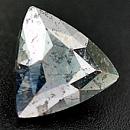
We
have not photographed our Cobaltite
gems. Please
check back soon. |
