|
|
||||||||||||||||
|
||||||||||||||||
|
||||||
|
|
|
|
Taaffeite
(Magnesiotaaffeite-2N'2S) |
|
| | |
| Discovered in 1945 (1951); IMA status: Valid (approved 1982) | ||
|
| ||
|
Chemistry |
|
|
| |
|
Mg3Al8BeO16 | |
|
|
Magnesium Aluminum Beryllium Oxide |
|
Molecular Weight: |
553.77 gm |
|
Composition: |
Magnesium |
13.17 % |
Mg |
21.83 % |
MgO |
|
|
Beryllium |
1.63 % |
Be |
4.52 % |
BeO |
|
|
Aluminum |
38.98 % |
Al |
73.65 % |
Al2O3 |
|
|
Oxygen |
46.23 % |
O |
|
|
|
|
|
100.00 % |
|
100.00 % |
= TOTAL OXIDE |
|
|
|
||||
|
Classification |
|
|
| |
|
Oxides | |
|
4/B.07-20 | |
|
|
4 : OXIDES (Hydroxides, V[5,6] vanadates, arsenites, antimonites, bismuthites, sulfites, selenites, tellurites, iodates)
|
|
Related to: |
Taaffeite Group. |
|
Members of Group: |
Taaffeite Group: Ferrotaaffeite-6N'3S (Perhmanite), Magnesiotaaffeite-2N’2S (Taaffeite), Magnesiotaaffeite-6N’3S (Musgravite) |
|
Varieties: |
None |
|
Synonyms: |
Bemagalite, Magnesiotaaffeite-2N'2S, Taaffeite, Taprobanite |
|
|
|
|
Crystal Data |
|
|
|
|
|
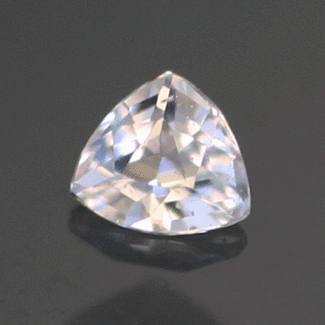
Crystals are hexagonal, pyramidal or flattened, to 2 cm, may be intergrown with Nigerite or Hogbomite; in fine-grained aggregates. Typically found as tumbled stones in gem gravels. |
|
|
Possible on {0001} |
|
|
|
|
|
Physical Properties |
|
|
|
|
|
Fair on {001} |
|
|
Irregular/Uneven, Conchoidal |
|
|
Brittle |
|
|
8.0 - 8.5 |
|
|
3.605 - 3.613 (g/cm3) |
|
|
None |
|
|
Not Radioactive |
|
|
|
|
|
Optical Properties |
|
|
|
|
|
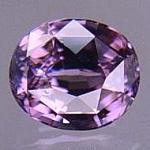
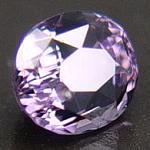
Mauve, Lilac, Pink, Violet Red, Red, Brown, deep to pale Grayish Purple, Blue, Greenish, pale Beige-Gray, may be nearly Colorless. |
|
|
Transparent to Translucent |
|
|
Vitreous |
|
|
1.717 - 1.736 Uniaxial ( - ); may be anomalously Biaxial |
|
|
0.0550 |
|
|
n/a |
|
|
E= yellow rose; 0 = carmine red (for a deep red example) |
|
|
|
|
|
Occurances |
|
|
|
|
|
Geological Setting: |
In gem gravels (Sri Lanka); in skarns at the contact between dolostones and limestones with beryllium-bearing granite (Hsianghualing Ridge, China); in spinel-phlogopite schists (Mt. Painter, Australia). |
|
Common Associations: |
Spinel, Apatite, Phlogopite, Zircon, Garnet, as inclusions (Sri Lanka); Hsianghualite, Chrysoberyl, Phenakite, Zinnwaldite, Cancrinite, Fluorite, Spinel, Calcite (Hsianghualing Ridge, China). |
|
Common Impurities: |
None |
|
Type Locality: |
Niriella Village, Ratnapura, Sabaragamuwa Province, Sri Lanka |
|
Year Discovered: |
1945; identified as a new mineral in 1951; IMA approved in 1982 |
|
View mineral photos: | |
|
|
|
|
More Information |
|
|
|
|
|
| |
|
|
|
|
Taaffeite was originally named after Count Edward Charles Richard Taaffe (1898 - 1967), a Bohemian-Irish gemologist, who discovered the first specimen. It has recently been renamed Magnesiotaaffeite-2N’2S as a method of clarifying the complexity of the compositions of Taaffeite group minerals including Musgravite, Perhmanite and Taaffeite and the influences of the minerals Spinel and Nolanite on them. The Taaffeite group is redefined for minerals composed of Spinel and modified Nolanite modules. The modified Nolanite module has the composition BeTM4O8. If the Spinel module is dominated by the Spinel component, MgAl2O4, the prefix ‘magnesio’ is used. If the Spinel module is dominated by the Hercynite component, FeAl2O4, the prefix ‘ferro’ is used. So,
according to the new nomenclature accepted by the IMA (International Mineralogical Association),
Taaffeite has become Magnesiotaaffeite-2N’2S,
as it is composed of two modified Nolanite modules (2N)
and two Spinel modules (2S). Correspondingly,
Musgravite has become Magnesiotaaffeite-6N’3S
and Perhmanite has become Ferrotaaffeite-6N’3S.
Taaffeite is now an IMA approved name for the group
of minerals containing Musgravite (Magnesiotaaffeite-6N’3S), Perhmanite
(Ferrotaaffeite-6N’3S) and Taaffeite (Magnesiotaaffeite-2N’2S).
The name Musgravite has been relegated to trade name
status. However, I suspect that the names Taaffeite and Musgravite
will continue to be used in the gem trade as the individual
gem names. |
|
|
||||||||||||||||||||||||||||||||||||||||||||||||||||||||||||||||||||||||||||||||||